Author: Domagoj Markovina
Most companies eventually end up with a collection of disparate software platforms, combined with (way too many) manual procedures and undocumented “in one’s head” practices. A typical history log of past initiatives would unearth a CRM here, a workflow tool there and an AI assistant somewhere else, each one promising to solve a specific problem. Which at first they probably did – in isolation but not as a whole.
The usual sales person’s “day of life” scenario runs along these lines: your sales team logs opportunity data in the CRM, then switches to another tool to create quotes. They then jump to email to communicate and follow up with their clients and prospects. They use a separate system to track contract renewals. The marketing team works in their own platform and customer service has theirs again.
Everyone’s busy working, but nobody has the full picture as they “can’t see the wood for the trees”.
The Hidden Cost of Fragmentation
When you run your business on point solutions, you’re not just managing multiple tools. You’re also managing the gaps between them.
Data doesn’t flow automatically. Your sales rep updates a deal in the CRM, but the renewal date sits in a spreadsheet. A customer complaint lands in the service desk, but the account manager never sees it. Marketing runs a campaign, but sales doesn’t know which leads came from where, let alone see the previous conversation in digital channels.
You end up with:
- Manual data entry between systems
- Duplicate records across platforms
- Delayed reporting because someone needs to compile data from three different sources
- Decisions made on incomplete or outdated information, or both
And the worst part? You’re paying for all of it. Not just in software costs, but in time. Your team spends hours each week wrestling with tools instead of talking to customers.
What Actually Matters in Sales
Speed matters. Not just how fast you respond to a lead, but how quickly you can move a deal through your entire process. From first contact to signed contract.
Visibility matters. You need to know which deals are progressing, which ones are stalled, and why. Not just for one rep, but across your whole team.
Context matters. When a customer calls, you should see their full history. Every conversation. Every purchase. Every support ticket. Not just what’s logged in one system.
Point solutions can’t deliver this. They weren’t designed to. Each one optimises for its own narrow function. That’s their strength and their limitation.
How Unified Platforms Change the Game
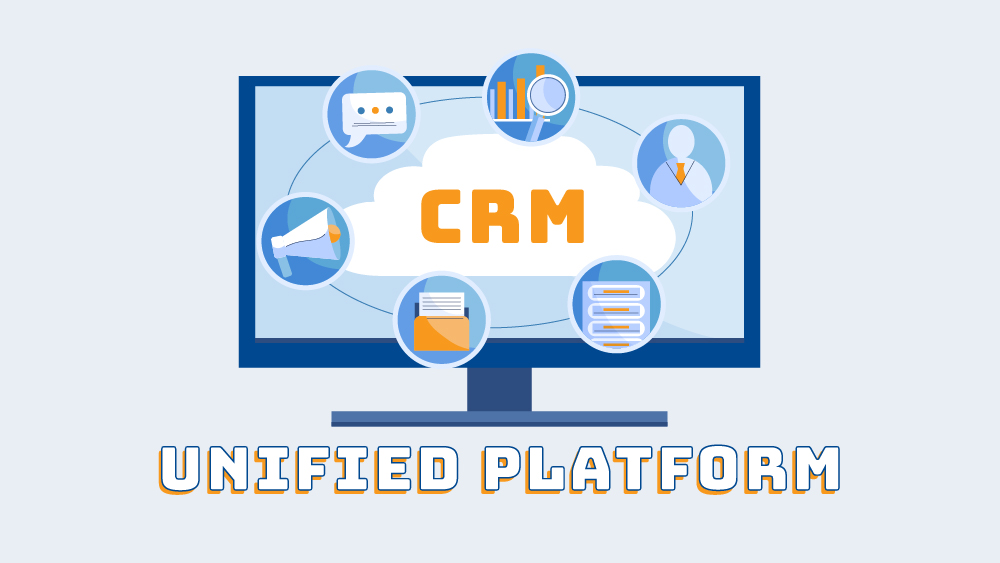
A unified platform works differently. Everything lives in one place: sales, processes, automation, AI, and integrations. One login, one interface and one source of truth.
This isn’t just about being convenient. It fundamentally changes how your business operates.
When a lead comes in, the system can automatically route it based on your rules, notify the right person, and suggest next steps based on similar past deals. Your rep doesn’t need to think about which tool to open or which process to follow, as everything is in one place.
When a deal moves forward, everyone who needs to know gets updated automatically. Finance sees it in their pipeline. Delivery teams can start planning. Management has current numbers without asking for reports.
When a contract comes up for renewal, the system flags it weeks in advance. It shows you the customer’s history, their satisfaction scores, their recent interactions. Your renewal conversation starts with context, not guesswork.
The Role of AI That Actually Helps
AI is everywhere now, and most of it is noise.
But when AI natively sits inside a unified platform, it becomes useful. Not because the AI itself is different, but because it has access to actual, relevant data.
Think about what happens when AI can see your complete sales process. It knows which deals close and which ones don’t. It knows how long each stage typically takes. It knows which customer segments convert best.
That means it can:
- Suggest which leads deserve immediate attention
- Recommend next steps based on what worked for similar deals
- Draft emails that match your company’s tone and past successful messages
- Predict which renewals might be at risk
This only works if your AI can access unified data. Point solutions with AI built in can only see their own slice of information. They’re making suggestions based on an incomplete picture.
Process Automation That Scales
Every company has processes: How you qualify leads, how you approve discounts, how you onboard new customers or handle renewals.
In a fragmented system, these processes live partly in people’s heads, partly in email threads, partly in various tools. When someone leaves, their knowledge goes with them. When you hire someone new, training takes weeks.
A unified platform lets you capture this knowledge and build these processes into the system. Not as rigid workflows that frustrate everyone, but as flexible guides for your teams.
When a discount needs approval, the request goes to the right person automatically. They see all the context they need to decide. Once approved, everything updates. The quote, the forecast – and the sales person is guided forward.
When a new customer signs, their details flow to delivery, finance, and support automatically, kicking off the personalised on-boarding process. Everyone starts from the same information.
This doesn’t just free up your teams’ time. It reduces errors and frustrations and it makes your business more robust. And it means you can start further improving your processes based on data, not someone’s best guess.
Integration Without the Headache
“But we already have systems that work,” you might say. “We can’t rip everything out.” Fair point.
A proper unified platform doesn’t require you to abandon everything else. It should integrate cleanly with your existing tools. Your accounting software. Your email. Your calendar. Your industry-specific systems.
The difference is that integrations are built in, not bolted on. You’re not paying for middleware or custom code just to make two systems talk to each other. The platform handles it, with actual User Experience being a key adoption consideration, and not just trying to tick off the list of feature requirements.
This matters more and more as you grow. Every new tool you add to a fragmented stack creates more integration points to maintain. With a unified platform, new capabilities plug into the same foundation, easy to use and familiar to a wider user base, inside and outside of your organisation.
The Methodology Question
Technology matters. But methodology matters more.
You can buy the “best” platform in the world and be guaranteed to fail if you implement it wrong. We’ve seen this too many times. Companies rush to deploy new software without thinking through how people will actually use it.
The right approach starts with understanding your current reality. How do deals actually move through your business today? Where do they get stuck? What information do people need that they can’t easily get?
Then you design processes that match how your team works (which is not to say to blindly automate wrong or even worse redundant processes), not how the software wants you to work. You configure the platform to support these processes. You train people not just on features, but on why things are set up the way they are, especially in phased rollout approach.
You start simple. Get the basics working smoothly before you add complexity. You measure what matters and adjust based on real results, not assumptions.
This takes time. It takes expertise. But it’s the difference between a system that helps and one that gets ignored.
What This Means for You
If you’re just starting with CRM, you have an advantage. You can build on a unified foundation from day one. You won’t accumulate technical debt from point solutions that don’t talk to each other.
If you’re replacing an old system, the case is even stronger. You’ve already lived with fragmentation. You know what it costs. Moving to a unified platform isn’t just an upgrade, it’s a fundamental shift in how you operate.
Either way, the goal is the same. Faster sales cycles because your team spends time selling, not managing software. Better visibility because all your data lives in one place. Smarter decisions because you have complete context.
The tools exist and the technology works. The question is whether you’re ready to stop managing gaps and start running your business on solid ground.
Ready to Move Beyond Fragmentation?
If your current systems feel like they’re working against you rather than with you, let’s talk. We help companies design and implement unified, flexible platforms that actually fit how they work and serve as a launchpad for future growth.
No sales pitch. Just a straightforward conversation about where you are now and what makes sense for your business.
Get Your Free Consultation and Demo